

What Are Dental Implants?
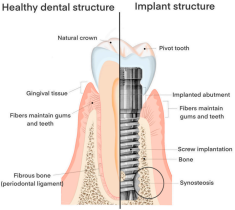
A dental implant consists of a threaded post/artificial root, an abutment, and the restoration. When a natural tooth is extracted, the Implant (often made of titanium) is inserted in the alveolar space left in the mandible. The Implant and abutment form a foundation for the dental restoration (e.g., a crown), allowing patients to regain long-term function (biting, speech) and for aesthetic purposes. More than 90% of dental implants survive during the follow-up period after placement, and for 10-15 years after. Lifestyle factors (e.g., smoking, diabetes, hypertension) affect the survival and stability of implants.
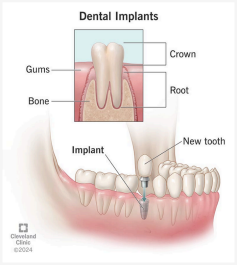
How Do Dental Implants Work?
- Assessment: Implants are tailored to your individual anatomy. The dentist will review your medical history, conduct exams, and collect imaging data (e.g., cone-beam CT) to assess bone quality and determine implant placement/orientation.
- Implant surgery: The surgery will be performed under local or general anesthesia. The implant will be placed in the jaw bone in the alveolar space shaped to match its dimensions. The opening is then filled and stitched up to allow healing. A temporary crown may be placed during this time, if needed.
- Osseointegration: Bone is a living tissue, and actively remodels itself through resorption and formation in response to biomechanical and biochemical stimuli. When an implant is inserted, new mandibular bone surrounds the artificial root and mineralizes, healing over 3-9 months.
- 4. Abutment and final restoration: Once the bone has healed, the abutment is attached to the threaded post, and the final restoration is completed.
Benefits & Risks Of Dental Implants
Benefits:
- Improved chewing and biting functions.
- Improved aesthetics (a better smile!)
- Long-term repair.
Risks:
- Possible discomfort after the procedure (e.g., minor bleeding, swelling).
- Slow osseointegration
- Infection
Implant Supported Complete Dentures
Complete dentures which replace all missing teeth that are fabricated on jaw bone that is resorbed are not stable and move when eating, speaking or opening the mouth wide. Implants can offer a solution by providing 2-4 stumps where the denture snaps in. This snap fit denture provides excellent chewing efficiency, aesthetics and increases confidence of eating in public without the fear of any embarrassment over loose dentures.
Ready for a consultation with our doctors?